
A SEED TO SPOON AGRITOURISM TRAIL IN GHANA'S VOLTA REGION

Banana & Plantain


Banana & Plantain Tour
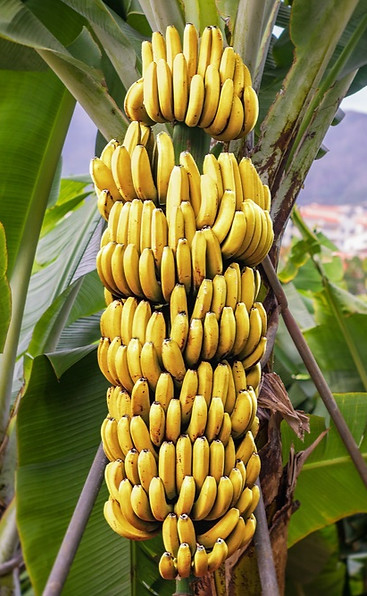
In Ghana, four main banana varieties are commonly grown: Mysore (locally known as Alata kwadu), Gros Michel, apple banana, and red banana. Apple banana, red banana, and the Gros Michel all belong to the Cavendish subgroup, a commercially important cultivar favored for export markets.
The Cavendish banana is known for its "typical" appearance and is often found in local markets and grocery stores. Mysore is a local variety that is well-regarded for its quality, shelf life, and consumer preference. It has the lowest moisture content, and the highest total soluble solids (TSS) compared to other varieties. Botanically, bananas are classified as a berry.
Plantains are a type of banana that are cooked before consumption, often used in stews, soups, or fried. In Ghana, plantains are broadly classified into two main groups: Apantu (false horn) and Apem (French horn). Apantu is characterized by horn-shaped plantains. Apem is a common and widely cultivated type of plantain. A third group, Asamieunu/Asamiensa (True Horn) make up a a smaller portion of total plantain production.
Traditional varieties of plantain in West Africa include Big Ebanga, Orishele, Afoto, and Agnirin. When growing plantains, farmers consider height, with shorter varieties requiring less staking and easier harvest.
What Will You Experience?
In the Volta Region, groundnut cultivation is driven by smallholder farmers who primarily use rain-fed systems with limited improved inputs. Local production of groundnuts is primarily for local consumption, and provides significant economic livelihoods through local, small-scale production. Groundnuts are both a major source of protein in the Ghanaian diet and a key cash crop. They are an important local subsistence crop and as well as key commercial income source.
This tour will cover the groundnut production cycle by visiting a peanut farm in Adaklu-Waya to learn about the groundnut growing cycle.
-
Learn about cultivation, harvesting, drying, and storage.
-
Experience the the process of shelling, as well as small-scale processing
Because of the seasonal nature of agriculture, some aspects of planting, harvesting, and production will be out of season; however, travelers may engage with growers and producers who are prepared to share their insider knowledge.


